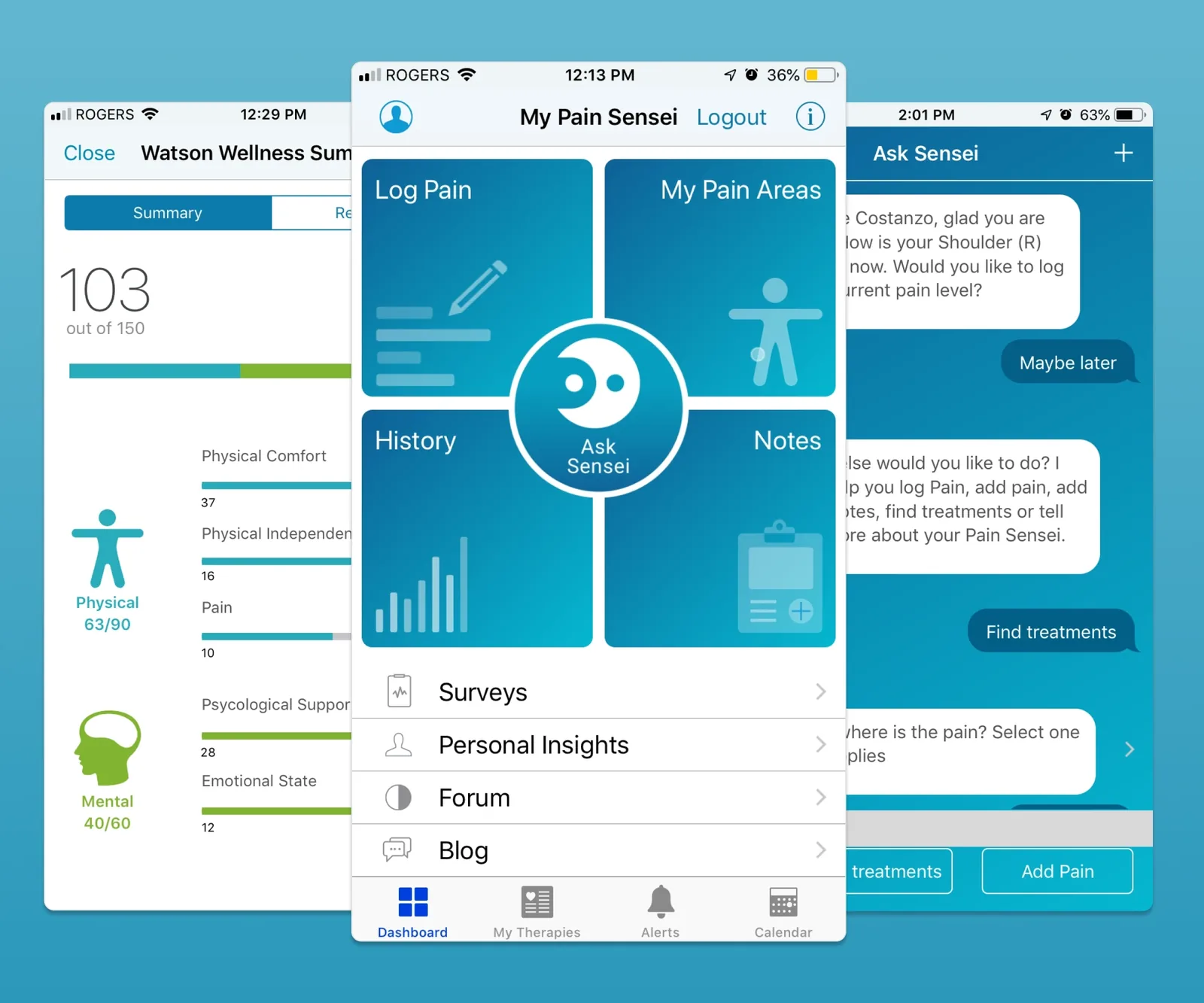
My Pain Sensei was a chronic-pain management app built in a vacuum for over a year, with no iterative validation process behind it. The team that built it had little startup product experience, and it showed: an expensive, dated interface wrapped around a monitoring tool that patients weren’t actually using. A heuristic review turned up 60+ critical and major usability issues.
The pivot wasn’t a redesign. It was going back to the people the app was supposedly built for.
The context: are we really solving any pain?
The original app was conceived as a digital monitoring tool: patients log and track their pain, and the data gets reported out. Sound in theory. In practice, nobody had validated that logging pain was the thing chronic-pain patients actually needed help with.
The research: time to turn things around
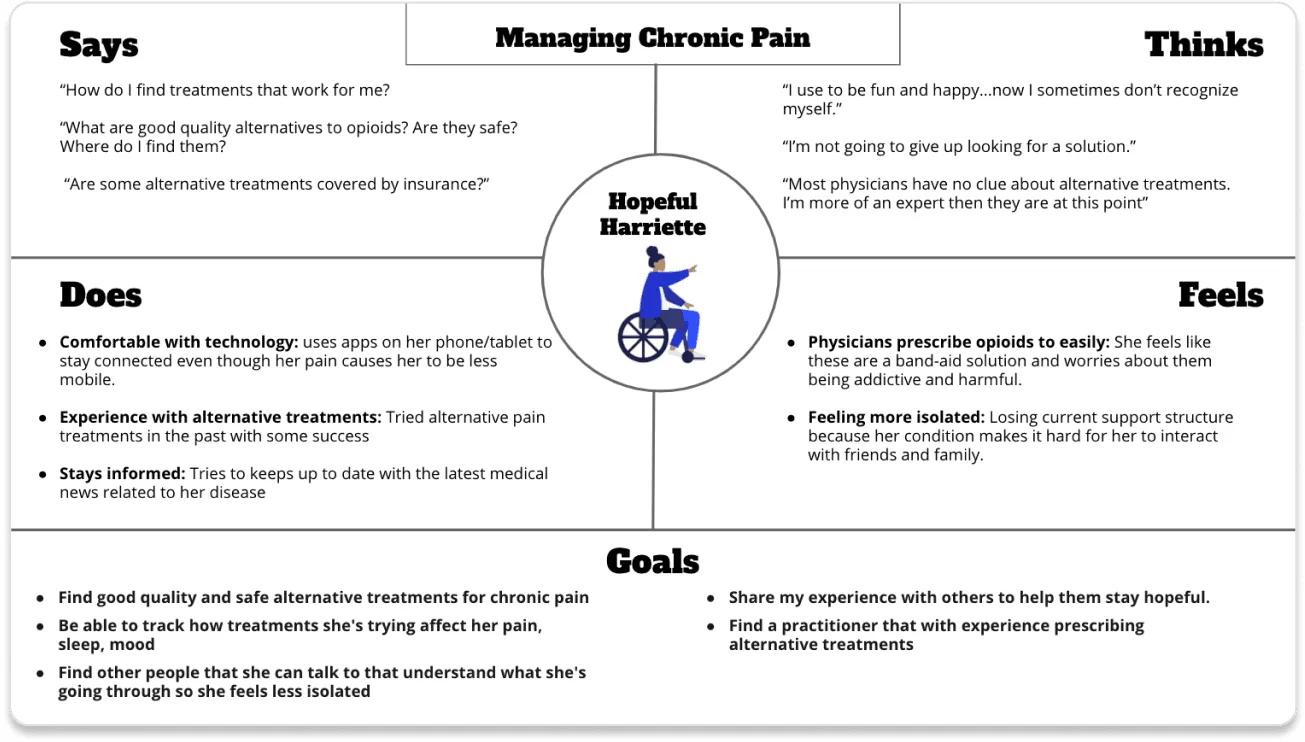
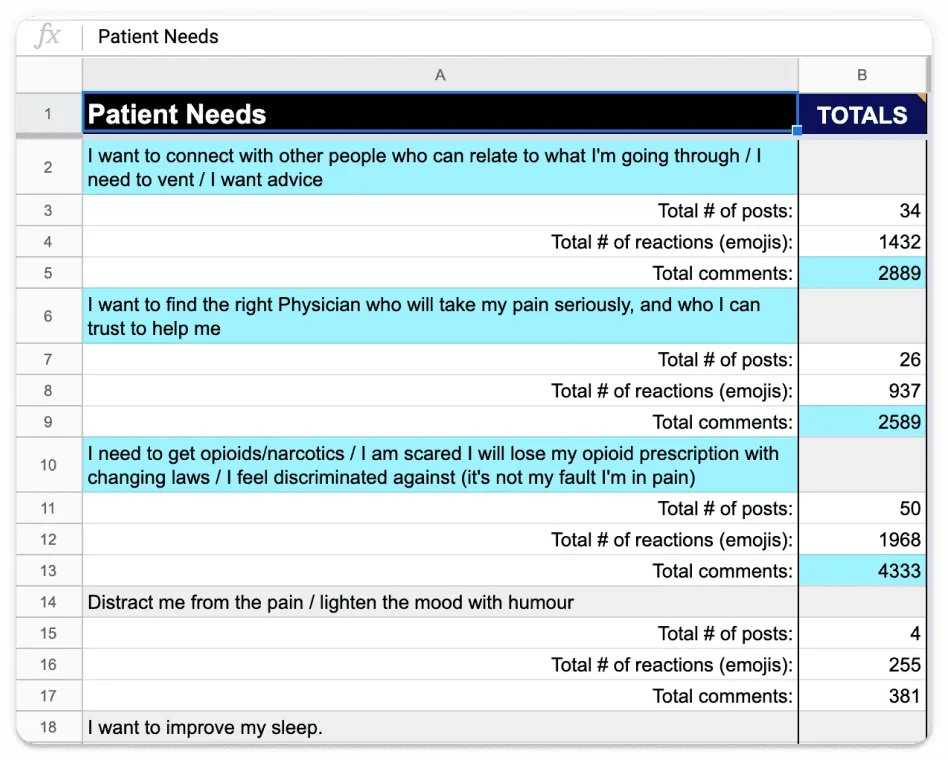
I led work to properly define the target personas inside the broad “chronic pain” umbrella, running primary research interviews with real patients and building an empathy map from what they actually said, not what the product roadmap assumed they’d want. One of the more useful, unglamorous moves: systematically ranking patient needs surfaced from chronic-pain communities on Reddit, which reframed several assumptions the original build had baked in.
The solution: making an impact
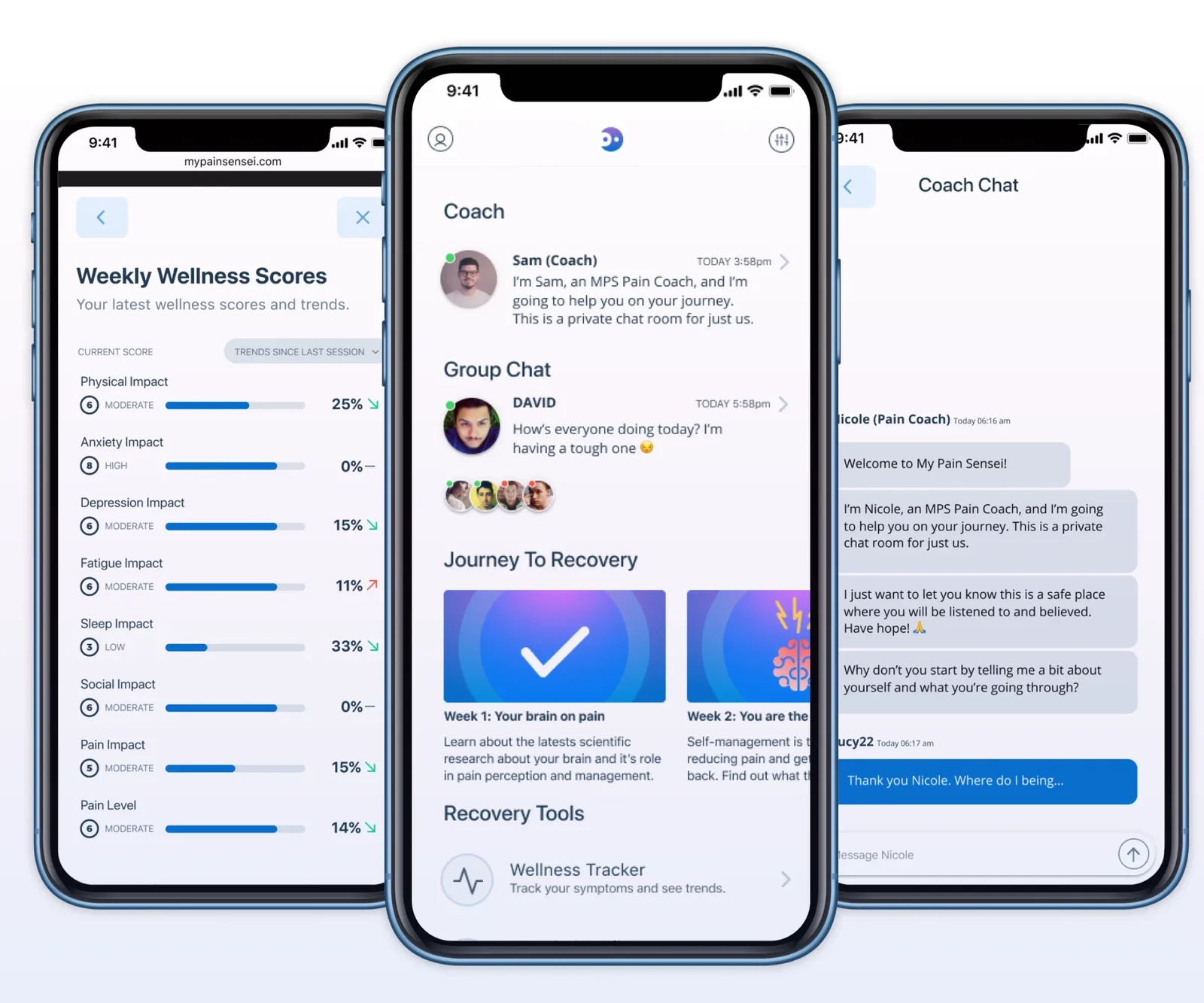
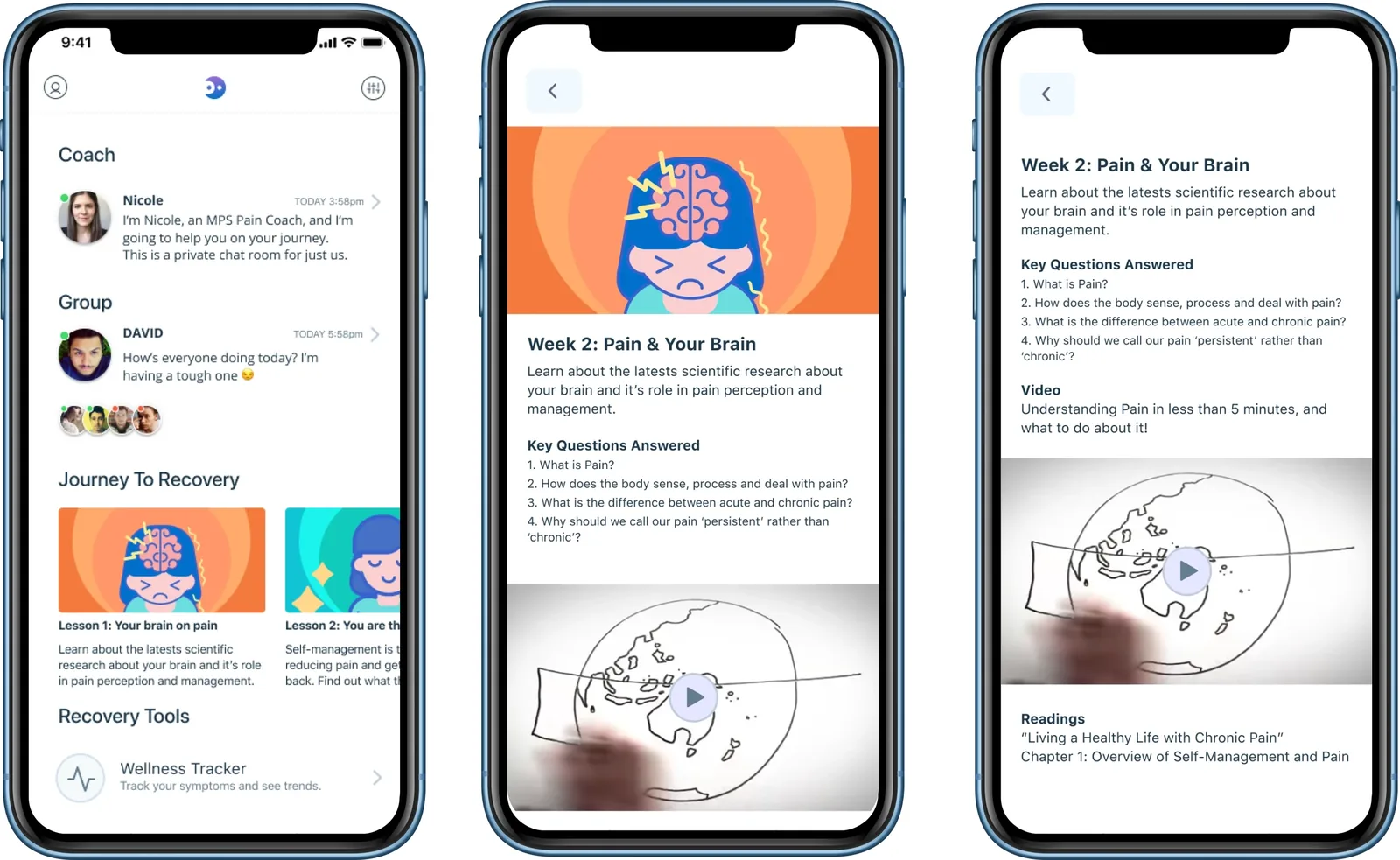
The rebuild took a year and a half of iteration, grounded in the values that research established early, not retrofitted at the end. The core addition was The Journey to Recovery, a virtual pain self-management program built in collaboration with clinical partners and integrated directly into the redesigned app, rather than bolted on as a separate feature.
The results: getting their lives back
My Pain Sensei was acquired by The DNA Company for roughly $30M in under two years from when the rebuild started. That’s a real outcome, but it’s not the one that mattered most day to day. The lasting measure was patients reporting the app actually helped them manage their pain, which the original version never came close to.